Immunotherapy for GI Cancer: The Breakthrough Treatment Offering New Hope
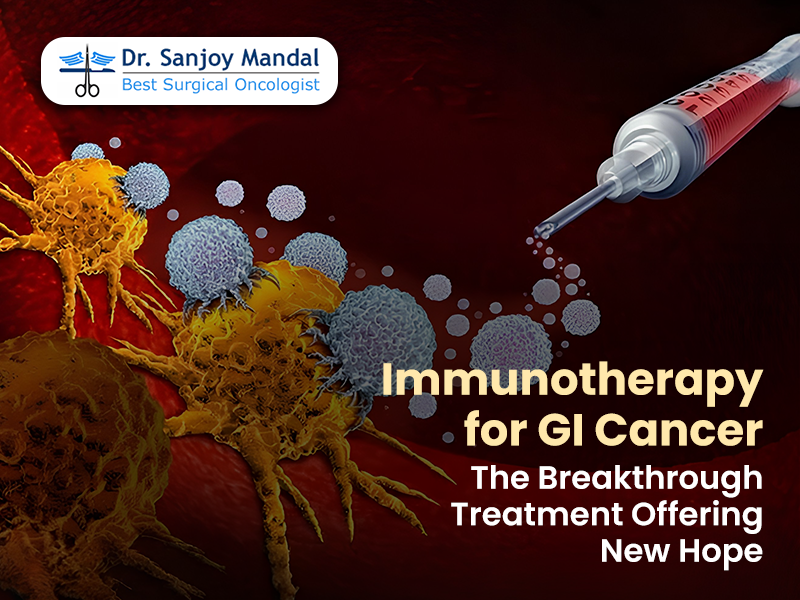
1Imagine being told that surgery and chemotherapy are no longer your only options. That your own immune system might be the hero in your fight against a digestive tract tumour. For many people with gastrointestinal cancer, that possibility is now real. As someone seeking trusted care, you’ll want the expertise of someone like Dr. Sanjoy Mandal, a highly experienced gastrointestinal oncosurgeon in Kolkata — someone who knows both surgery and the newest therapies.
What is immunotherapy and why does it matter
Immunotherapy for gastrointestinal cancer means treatments that harness or retrain the immune system to recognise and destroy cancer cells. Traditional treatments, such as surgery, radiation, and chemotherapy, remain important — but immunotherapy offers a new pillar of care.
In GI cancers (such as stomach, oesophageal, and colorectal), this approach is especially promising when standard treatments alone are insufficient. Early use of immune-based therapies has shown durable responses in some patients.
Who benefits and what are the key methods
Not every patient is guaranteed a response. But certain methods have shown real success:
- Checkpoint inhibitors in gastric cancer: These drugs block immune “brakes” (e.g., PD-1/PD-L1) so your T-cells attack cancer.
- dMMR colorectal cancer treatment: If your tumour has deficient mismatch repair (dMMR) or high microsatellite instability (MSI-H), immunotherapy tends to work much better.
- Adoptive cell therapy for GI tumours & Tumour-infiltrating lymphocyte therapy: These involve extracting immune cells, enhancing them, and reintroducing them to fight cancer. More experimental, but increasingly realistic.
- Cancer vaccines for colorectal cancer: Training the immune system via specialised vaccines is under investigation and showing early promise.
- Combination immunotherapy for GI cancers: Using immunotherapy together with chemotherapy, targeted therapy or radiation to boost outcomes.
What you should discuss with your surgeon or specialist
If you’re working with a gastrointestinal oncosurgeon in Kolkata, here are key questions to ask:
- Am I eligible for FDA-approved immunotherapy drugs for GI cancers? Which ones? (Some drugs are approved; others experimental.)
- Do I have biomarkers (dMMR/MSI, PD-L1) that suggest immunotherapy will be more effective for me? Biomarker testing is crucial.
- What are the risks of immunotherapy resistance in GI cancers? Some tumours develop mechanisms that block immune attack.
- Could I benefit from newer modalities such as tumour-infiltrating lymphocyte therapy or vaccine trials?
- What is the plan? Is surgery still involved? How will immunotherapy fit into the overall treatment timeline?
Why choosing a specialist matters
When dealing with complex therapies such as these, you’ll want a surgeon who not only performs operations but also understands immunotherapy and multidisciplinary care. A gastrointestinal oncosurgeon in Kolkata with this combined focus can guide you through:
- Evaluating whether immunotherapy is appropriate for your disease type and stage
- Coordinating care between surgery, medical oncology, and immunotherapy research
- Monitoring how your immune system responds, adjusting therapy and managing side-effects
Immunotherapy for gastrointestinal cancer is no longer science fiction
From checkpoint inhibitors to adoptive cell therapies and cancer vaccines, the field is moving fast. While not every patient will benefit yet, the right specialist will help determine if you are a candidate. For eligible patients, these therapies can shift the odds.
To know more, book an appointment with Dr. Sanjoy Mandal, a trusted gastrointestinal oncosurgeon in Kolkata.


Comments
Post a Comment